Residential Electrical Installation: Step-by-Step Procedure
Review the steps we’ll take to install electrical in your new build
As electricians in San Antonio, TX we are regularly tasked with building residential electrical installations in new constructions (both homes and multi-family units). Any new installation is broken down in several phases aiming at ensuring that the electrical system is safe, efficient, meets the needs of a family, and is 100% compliant with all applicable local codes and federal regulations. For the benefit of people interested in building a new home and understanding what are the phases of an electrical installation, we broke down our procedure step-by-step and summarized it here.
1. Residential Electrical Installation: Planning & Design
Before the first cable is run into a new home, the electrical installation will be fully planned out and vetted by the General Contractor, the State, the county and the city. The first phase is a phase of planning and designing the installation according to the blueprints provided by the GC, and other details provided by the homeowners.
- Calculating the Load: Load calculation is like checking if your home’s electrical “backpack” can safely carry all your gadgets and lights. We’ll account for current and future electrical needs.
- Designing the Circuits: We’ll determine circuit loads, design circuit paths, and ensure safety and efficiency.
- Selecting materials & supplies: Based on the load calculations and circuit design, we select the appropriate wire type (e.g., copper or aluminum) and size (gauge) for each circuit. We choose the circuit breakers that match the load of each circuit and provide the necessary protection. We decide on the type (e.g., standard, GFCI, dimmer) and style of outlets and switches for each room.
- Safety considerations: We pinpoint areas like bathrooms, kitchens, and outdoor spaces where there’s a higher risk of water contact. In bedrooms and other living spaces, we plan for the installation of Arc Fault Circuit Interrupters to prevent electrical fires.
2. Residential electrical installation: Rough-In phase
Each of these steps in the rough-in phase ensures that the foundational elements of the electrical system are correctly and safely put in place, ready for device installation and connections.
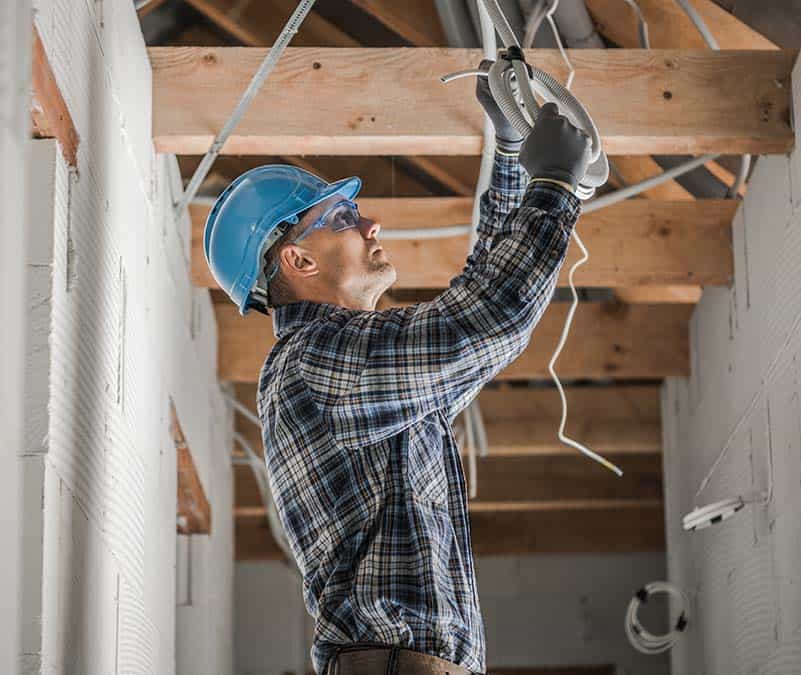
- Conduit Installation: Based on the circuit design, we determine the best paths for conduits inside walls, ceilings, and floors. We then decide on the type of conduit (e.g., PVC, metal) suitable for the environment and local codes. We drill the holes, attach conduit to framing, and ensure it runs seamlessly from the main panel to each electrical box.
- Box Installation: We choose the appropriate box types (e.g., single-gang, double-gang) based on the number of devices they house. We attach electrical boxes to studs, joists, or masonry using appropriate fasteners, ensuring they’re flush with the finished wall or ceiling surface.
- Wire Pulling: We run wires through the conduits, starting from the main panel and extending to each electrical box. We clearly label wires at both ends to identify their purpose (e.g., “kitchen lights” or “living room outlet”). We ensure there is extra wire length at each box for trimming and connections later.
3. Electrical Installation: Inspection
Before proceeding to the next phase, a preliminary inspection is usually required. An electrical inspector checks the wiring, ensuring it’s up to code, properly secured, and that the right type and size of wire are used for each circuit.
4. Device installation
At this point, we will install all outlets and fixtures.
- Outlets and switches: We trim the wires to the appropriate length and connect them to outlets and switches.
- Light fixtures: We install the ceiling and wall light fixtures, and connect them to the wiring.
- Circuit breakers: We install the circuit breakers in the main panel and connect the circuits to them.
5. Main Panel Connection
The next step is to connect the main panel. This phase ensures that the home electrical system is safely connected to the grid, ready to distribute power throughout the residence.
- Service Entry: We work with the utility company to identify the best location for the electrical service to enter the home. We set up a conduit from the entry point to the main panel, ensuring it meets local code requirements for depth and protection. We run the main service wires (two hot wires and one neutral) through the conduit into the main panel.
- Meter Installation: We pick a location that is easily accessible for meter reading and maintenance, outside the home. We secure the meter base (the box that houses the meter) to the exterior wall, ensuring it is level and at the correct height. The utility company will typically install the actual meter once everything is set up.
- Main Breaker: We secure the main breaker within the main panel. It must be positioned in such a way it is easy for the homeowners to cut off power to the entire house. We connect the grounding wire from the main breaker to the home grounding system to ensure safety.
6. Residential electrical installation: Testing & verification phase
These tests are designed to catch and correct any issues before the system is energized, reducing the risk of electrical fires, shocks, or equipment damage.
- Continuity Check: We use a continuity tester or multimeter to ensure that electrical current can flow through each wire and circuit without interruption. If we detect a break in continuity, we identify the location of the issue and repair the wire or connection as needed.
- Polarity check: We use a polarity tester to ensure that all outlets and connections are wired correctly, with hot and neutral wires in their proper places. If we detect an incorrect polarity, we rewire the connections to ensure proper orientation.
- Voltage test: Using a multimeter we measure the voltage at various points in the system, to ensure it falls within the expected range. If voltage levels are found to be outside the acceptable range, adjustments may need to be made at the main panel or at individual circuit breakers.
- Grounding test: We ensure all components are securely connected and free of corrosion. If we find the grounding system is inadequate, we may install additional grounding rods, or clean and tighten existing connections.
The final steps of the electrical installation ensure it is not only complete and functional, but also documented and understood by the homeowner using proper documentation adjoined to a successful final safety inspection.
7. Residential electrical installation: Final Inspection
- Requesting the inspection: Once we complete the electrical installation, we request a final inspection from the San Antonio building department.
- Walkthrough with the inspector: The electrical inspector conducts a thorough examination of the entire electrical system, checking for code compliance, safety, and proper installation.
- Addressing any issues: If the inspector identifies any issues, they must be addressed and corrected before the system can be approved.
8. Commissioning
- Powering up: We energize the main panel by turning on the main breaker to supply power to the entire home.
- Testing devices & fixtures: We turn on and test all electrical devices, fixtures, and appliances to ensure they operate correctly.
- Checking for issues: We monitor for any unusual sounds, smells, or behaviors that might indicate a problem.
9. Documentation of the residential electrical installation
- Compiling installation details: We gather all details, blueprints, schematics, and reports related to the electrical installation.
- Creating a user manual: We develop a homeowner-friendly guide that explains the home’s electrical system, including the location of the main panel, circuit breakers, and key devices.
- Providing maintenance recommendations: Offer guidelines on routine maintenance, safety precautions, and potential upgrade suggestions.
This completes the step–by-step procedure of a typical residential electrical installation. As licensed professional electricians in San Antonio, TX we comply at all times with city, county and state code and ordinances. We did not mention here all the compliance details, but every step of the way would be completed per application regulations.
Selecting All Star Electric for your residential electrical installation
All Star Electric has been operating as licensed residential electricians and commercial electrical contractors in San Antonio since 1995, almost 30 years ago. We design, engineer and install all types of electrical systems for homes and businesses in San Antonio and neighboring cities in Bexar County.
Even if the mission is to install low-voltage systems, creating a residential electrical installation is not a hobby. It must be the work of a licensed professional electrician who will apply all their knowledge to ensure that the installation is safe, that it operates within specifications, and that it is compliant with all local codes and federal regulations.
If you think of installing any type of electrical system in your home, consult with us. Call us, and we will come to your residence to study your project, advise you, and give you an estimate.